
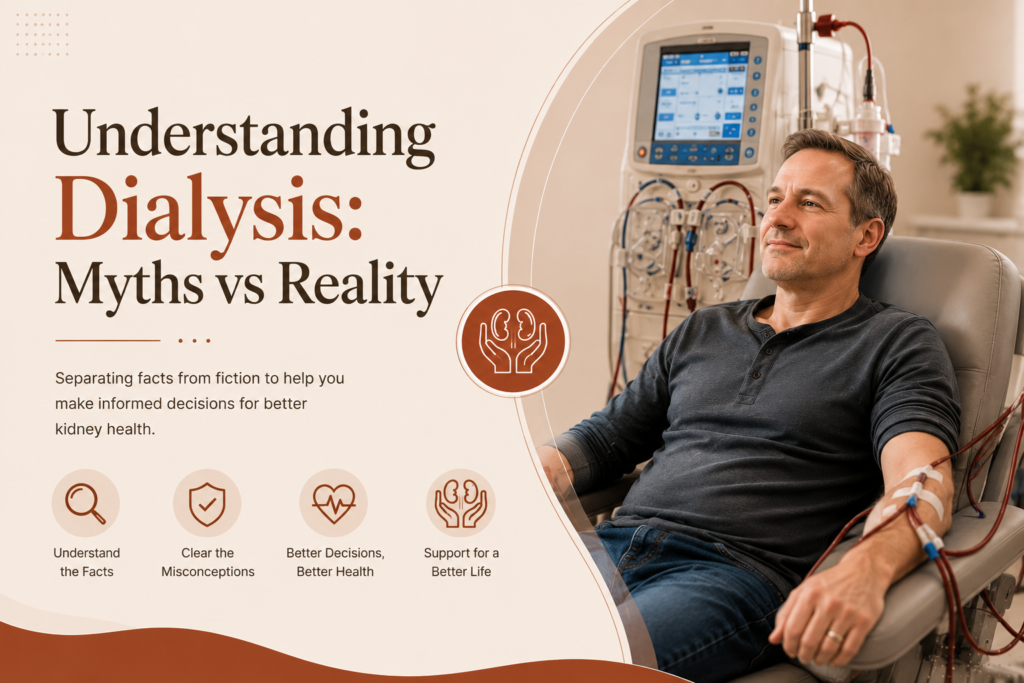
For many patients and families, the word dialysis brings up more fear than facts. This guide separates the most common dialysis myths from reality, explains what dialysis actually does, and shows what daily life on treatment can really look like.
Introduction: Why So Many Dialysis Myths Persist
For most people, hearing the word dialysis for the first time feels like a punch. It carries weight — fear, restrictions, the quiet worry that life as you know it is about to end. Most of what we hear about dialysis comes from whispered conversations, outdated stories, or a quick internet search that leaves us more anxious than informed.
But here's the truth: a lot of what people believe about dialysis simply isn't true anymore. Modern dialysis care has come a long way. Today, millions of people around the world are managing kidney failure, going to work, raising children, traveling, and living meaningful lives — all while on treatment.
This guide walks through the most common dialysis myths and facts, explains what dialysis really is, and shares what living with dialysis can actually look like.
What Is Dialysis?
When your kidneys stop doing their job well, your body needs help. Dialysis is a treatment that takes over some of the key tasks healthy kidneys handle every day — filtering waste, removing extra fluid, and balancing minerals in your blood.
It's usually recommended when chronic kidney disease has progressed significantly or when the kidneys have failed and can no longer keep up.
Why Some People Need Dialysis
Your kidneys are quiet workers. Every minute of every day, they filter your blood and remove what your body doesn't need. When they slow down or stop, toxins build up — and that's when problems begin.
Common causes that lead to dialysis include:
- Diabetes
- High blood pressure (hypertension)
- Long-standing chronic kidney disease
- Inherited kidney conditions (such as polycystic kidney disease)
- Acute kidney injury
Learn more from the National Kidney Foundation.
Common Dialysis Myths and the Reality Behind Them
Myth 1: "Dialysis means life is over"
Reality: It really doesn't.
This is probably the biggest fear people carry. Plenty of people on dialysis continue working, spending time with family, traveling, attending weddings, and watching their grandchildren grow up. With the right medical guidance, a thoughtful diet, and a steady routine, living with dialysis can actually mean feeling better than before treatment started.
Myth 2: "Dialysis is extremely painful"
Reality: The treatment itself is not painful.
Some patients feel a small pinch when the needle goes in, and some feel a little tired afterward — but the process is closely watched by trained medical staff. Today's dialysis machines and techniques are far more comfortable than they once were.
Myth 3: "Only elderly people need dialysis"
Reality: Kidney disease doesn't check IDs.
Young adults, middle-aged people, and even children can need dialysis. Some are born with kidney conditions. Others develop them due to autoimmune diseases, infections, or sudden injury. Age is just one part of the picture.
Myth 4: "Once you start dialysis, you can never stop"
Reality: It depends on the underlying cause.
If kidney failure is temporary — say, from a sudden injury or illness — kidney function may return, and dialysis can be stopped. For chronic, long-term kidney failure, dialysis may be ongoing, or a kidney transplant may become the next step.
Myth 5: "Dialysis patients can't eat or drink anything they enjoy"
Reality: Diet changes — joy doesn't disappear.
There are adjustments around sodium, potassium, phosphorus, and fluid intake, but a renal dietitian will help build a dialysis diet that fits you. Many patients still enjoy their favorite meals in smarter, more balanced ways.
Myth 6: "Dialysis fully replaces your kidneys"
Reality: Not quite.
Dialysis does a lot, but it can't completely replicate everything healthy kidneys do — like producing certain hormones. That's why medications, regular check-ups, and lifestyle choices stay important even after treatment begins.
Hemodialysis vs Peritoneal Dialysis: The Two Main Types
When people first research treatment options, they usually want to understand hemodialysis vs peritoneal dialysis. Here's a simple breakdown.
Hemodialysis
Blood is gently drawn out, cleaned through a special machine, and returned to your body. It's typically done at a dialysis center or hospital, though some patients are trained to do it at home.
Peritoneal Dialysis
This uses the natural lining inside your abdomen to filter waste, using a special fluid. It can offer more flexibility, more independence, and the ability to do treatments at home.
Your doctor will help you figure out which one suits your medical needs and your day-to-day life. Read more on the Mayo Clinic dialysis overview.
The Emotional Side of Dialysis
Starting dialysis isn't just a physical change — it's an emotional one too. Anxiety, sadness, frustration, and fear of the unknown are all normal.
The patients who do best are often the ones who don't go through it alone. Doctors, nurses, family members, counselors, faith communities, and patient support groups can make a real difference. Asking for support isn't weakness — it's part of healing.
Can You Live a Full Life on Dialysis?
Yes. Many people do. The patients who thrive tend to share a few habits:
- They show up consistently for treatments
- They take their nutrition seriously
- They stay as active as their body allows
- They manage stress
- They keep up with regular check-ins with their care team
It's not always easy. But it's far from impossible.
Final Thoughts: The Truth Behind Dialysis Myths and Facts
Dialysis isn't the end of life — it's a treatment built to support life. Letting go of the dialysis myths and getting comfortable with the facts is one of the most powerful things a patient or family can do. It replaces fear with understanding and helplessness with options.
Next step: If you or a loved one is preparing for dialysis, talk to a qualified nephrologist.
Frequently Asked Questions About Dialysis
Can dialysis cure kidney disease?
No. Dialysis manages the consequences of kidney failure but does not cure chronic kidney disease. A kidney transplant is currently the only treatment that can replace lost kidney function.
How long can someone live on dialysis?
Many people live for years — sometimes decades — on dialysis with consistent care, proper nutrition, and regular medical monitoring. Life expectancy depends on age, overall health, and adherence to treatment.
Can dialysis patients travel?
Yes. With advance planning, many dialysis centers worldwide can accommodate visiting patients. Hemodialysis centers exist in most major cities, and peritoneal dialysis offers even more flexibility.
Is dialysis done every day?
Not usually. Hemodialysis is typically done 3 times a week for about 4 hours per session. Peritoneal dialysis is done daily, often at home and sometimes overnight. Your nephrologist will design the right schedule for you.
What foods should dialysis patients avoid?
Most patients are advised to limit sodium, potassium, and phosphorus, and to manage fluid carefully. A renal dietitian can build a personalized dialysis diet plan.