
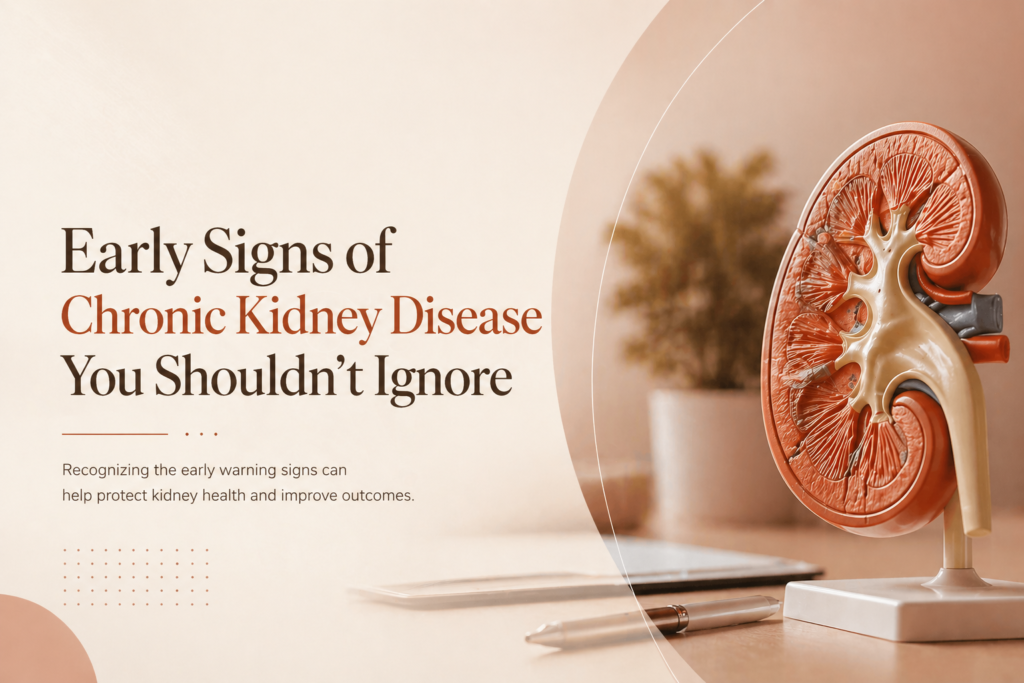
Kidney disease is often called a “silent condition” – not because it is rare, but because it progresses quietly. Many people don’t realize something is wrong until significant damage has already occurred.
Recognizing the early signs of Chronic Kidney Disease (CKD) can make a critical difference. Early detection allows timely intervention, better management, and improved long-term outcomes.
What is Chronic Kidney Disease?
Chronic Kidney Disease is a gradual loss of kidney function over time. Your kidneys play a vital role in filtering waste, balancing fluids, and maintaining overall internal stability.
When kidney function declines, toxins and excess fluids begin to accumulate in the body – affecting multiple systems.
Why Early Detection Matters
CKD often develops slowly, and in its early stages, symptoms can be subtle or mistaken for general fatigue or lifestyle issues.
Early diagnosis helps:
- Slow disease progression
- Prevent complications
- Improve quality of life
- Reduce the need for dialysis or transplant
Early Signs of CKD You Should Watch For
1. Persistent Fatigue & Low Energy
When kidneys are not functioning properly, toxins build up in the blood. This can lead to constant tiredness, weakness, and difficulty concentrating.
2. Changes in Urination Patterns
Your urine is one of the first indicators of kidney health.
Watch for:
- Increased or decreased frequency
- Foamy or bubbly urine
- Dark or blood-tinged urine
- Difficulty urinating
3. Swelling in Feet, Ankles, or Face
Kidneys regulate fluid balance. When this process is disrupted, fluid retention can occur – leading to visible swelling, especially in the lower body.
4. Puffiness Around the Eye
Protein leakage in urine (proteinuria) can cause persistent puffiness around the eyes – often more noticeable in the morning.
5. Loss of Appetite & Nausea
Accumulation of waste products in the bloodstream may lead to:
- Reduced appetite
- Metallic taste in the mouth
- Nausea or vomiting
6. Muscle Cramps
Electrolyte imbalances caused by impaired kidney function can result in frequent muscle cramps, especially at night.
7. Dry, Itchy Skin
Kidneys help maintain mineral balance. When disrupted, it may lead to dry skin and persistent itching.
8. High Blood Pressure
Hypertension is both a cause and a consequence of kidney disease. Poor kidney function can increase blood pressure, further damaging the kidneys.
Who is at Higher Risk?
You may have a higher risk of developing CKD if you have:
- Diabetes Mellitus
- Hypertension
- Family history of kidney disease
- Obesity or sedentary lifestyle
- Age above 50
When Should You Get Tested?
If you experience any of the above symptoms – or fall into a high-risk category – regular screening is essential.
Basic tests include:
- Blood tests (creatinine, eGFR)
- Urine tests (protein levels)
- Blood pressure monitoring
A Preventive Approach to Kidney Health
Simple lifestyle measures can support kidney health:
- Stay adequately hydrated
- Maintain healthy blood sugar levels
- Control blood pressure
- Follow a balanced, low-sodium diet
- Avoid overuse of painkillers
- Schedule routine health check-ups
Final Thought
Kidney health often doesn’t demand attention – until it becomes unavoidable. Paying attention to early signals your body gives you can prevent long-term complications.
Awareness is the first step toward prevention.
Sources & References :
National Kidney Foundation – CKD symptoms & guidelines
Mayo Clinic – Chronic kidney disease overview
Centers for Disease Control and Prevention – CKD statistics and early detection
World Health Organization – Noncommunicable diseases & kidney health insights